Argument Writing
Building an Argument | Claims and Reasoning Practice

Students practice turning ideas into structured arguments using claims, reasoning, and written support. This lesson introduces foundational argumentative writing skills.
Audience and Purpose in Writing | Writing with Intention

Students practice adjusting writing choices based on audience, purpose, and communication goals. This lesson supports intentional writing and rhetorical awareness.
Strong vs Weak Reasoning | Evaluating Arguments and Evidence

Students practice evaluating reasoning, identifying weak arguments, and strengthening written support. This lesson helps students recognize the difference between effective and ineffective reasoning.
Argumentative Writing Warm-Up (FREE) | Claims & Evidence Practice

Students practice quick argumentative writing skills using short claim and evidence activities designed for warm-ups, bellringers, or review.
Evidence-Based Writing
Using Evidence Effectively | Citing Text Evidence
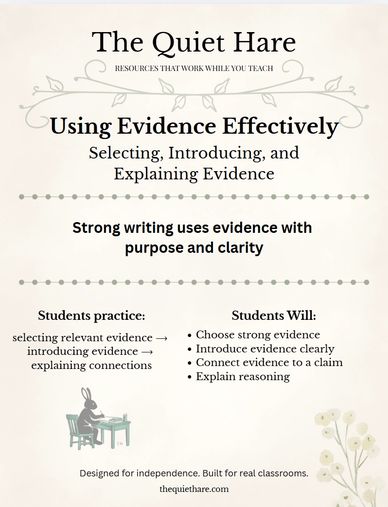
Students practice selecting, introducing, and supporting relevant evidence in their writing. This lesson strengthens evidence-based reasoning and written support skills.
Integrating Evidence | Embedding Quotes and Support

Students practice smoothly integrating evidence into their writing while improving sentence flow, clarity, and written support. This lesson works well for argumentative and literary analysis writing.
Explaining Evidence | Writing Commentary That Connects
Explaining Evidence | Writing Commentary That Connects
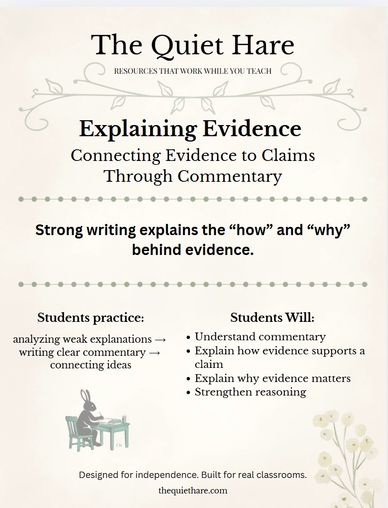
Students practice writing commentary that explains how evidence supports a claim instead of simply repeating information. This lesson strengthens analytical writing and evidence explanation.
Sentence Revision & Clarity
Revising Sentences for Clarity and Specificity | Revision Practice

Students practice revising weak or vague sentences to improve clarity, specificity, and precision in writing. This lesson supports sentence-level revision skills.
Combining Sentences for Clarity and Flow | Writing Practice
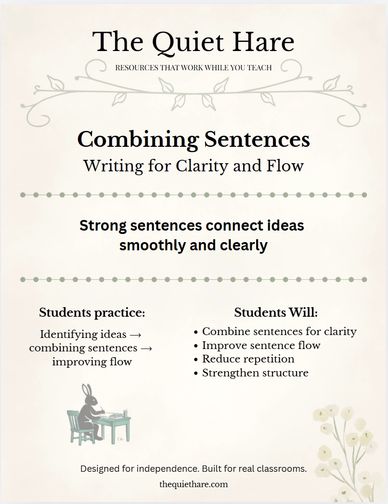
Students practice combining sentences to improve writing flow, sentence variety, and clarity. This lesson supports stronger sentence construction and organization.
Fixing Sentence Breakdown | Fragments & Run-Ons Practice
Fixing Sentence Breakdown | Fragments & Run-Ons Practice
Students practice identifying and correcting sentence fragments, run-ons, and breakdowns in writing. This lesson supports sentence structure and writing clarity.
Essay Writing Foundations
Writing a Clear Thesis Statement | Argument Writing Practice

Students practice writing focused and defensible thesis statements while learning how strong claims guide academic writing. This lesson works well for essay writing and argument instruction.
Writing Effective Paragraphs | Topic Sentences & Evidence

Students practice building clear paragraphs using topic sentences, evidence, explanation, and organization. This lesson supports paragraph structure and evidence-based writing instruction.
Prewriting Strategies | Brainstorming and Planning for Writing

Students practice brainstorming, organizing ideas, and planning written responses before drafting. This lesson supports essay preparation and writing confidence.
Editing and Revising Writing | Grammar, Clarity & Structure

Students practice identifying and improving weaknesses in writing through revision and editing strategies focused on clarity, grammar, and organization.
Literary & Narrative Writing
Literary Analysis Writing | Evidence-Based Paragraph Practice
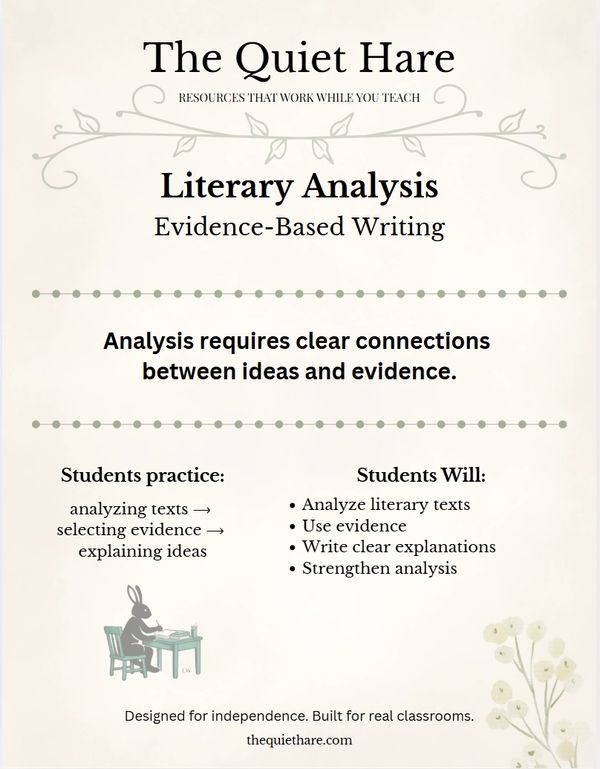
Students practice analyzing literature using evidence-based writing, structured paragraph development, and analytical reasoning. This lesson supports literary response writing and text analysis.
Narrative Writing | Descriptive Writing & Event Sequencing
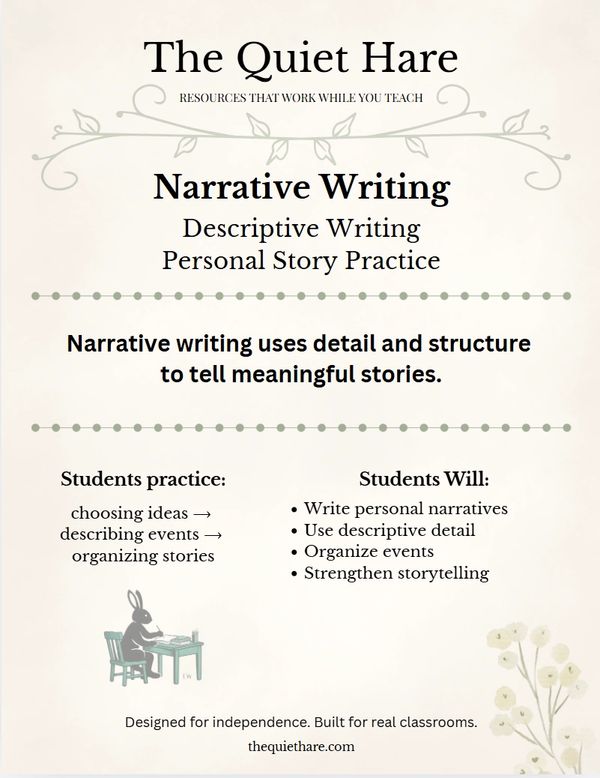
Students practice narrative writing through meaningful details, event sequencing, and descriptive storytelling techniques. This lesson supports structured narrative development for grades 9–12.